• Strain-dependent wetting of graphene: Darren’s first paper out in Chem. Sci.

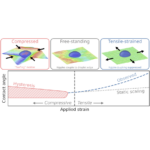
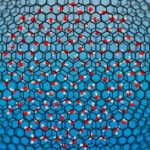
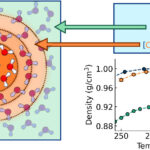
    Congratulations to Darren, who just published his first lead-author paper in Chemical Science! This marks our group's second paper published within this month, following Terry's achievement. The contact angle that water makes on a solid determines how it wets the surface, but experimental measurements for the water-graphene contact angle span a wide range,...
  • Noise-resilient training of machine learning interatomic potentials: Terry’s first paper out in J. Chem. Phys.

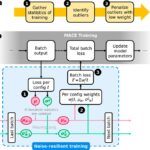
    Congratulations to Terry, who just published his first lead-author paper (J. Chem. Phys. 165, 144116 (2026)) over a summer project as an undergraduate student! His work is remarkably impressive, especially given that he was new to the field when he joined us. Machine learning interatomic potentials (MLIPs) are often trained on vast datasets...
  • Joe’s poster wins prize at the AiMat Summer School

    As the third poster prize won by a FAST group member this year -- congrats to Joe, whose poster on machine learning potentials for realistic nanoporous carbons (depicted below) wowed the judges at the AiMat Summer School! The AiMat "Machine Learning for Molecules" Summer School was held at Karlsruhe Institute of Technology from...
  • Isaac wins poster prize at the MMM Conference

    Following up from Willem's achievement back in April, we are proud to say that Isaac has also won a poster prize at the joint TYC-LJC MMM Conference, with his poster titled "False Metallization in Short-Ranged Machine Learned Interatomic Potentials" -- congratulations! The 2nd joint Thomas Young Centre and Lennard--Jones Centre Materials and Molecular...
  • Punting on the River Cam again

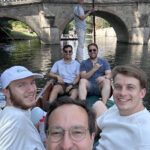
    As a farewell to Lucas's all-too-short visit, the FAST group headed out yet again to the punts — but this time, to race up and down the River Cam as quickly as possible — and do some sightseeing along the way. We also had a formal dinner at Gonville & Caius College last...
  • How reactive is water at the nanoscale and how to control it?

    Does water become more or less reactive when squeezed into gaps just a few molecules wide? Literature has disagreed for years. Using enhanced sampling molecular dynamics with machine-learned potentials, we found a surprisingly clean answer: confinement on its own doesn't change water's reactivity. Once you account for pressure and chemical potential, the apparent...
  • Willem’s work wins project poster prize!

    Congratulations to Willem, who won the poster prize at the CCP9 Conference and Community Meeting for his poster on the defect dynamics in Ice Ih, depicted below -- well done! The CCP9 Meeting was held in Liverpool from 21 to 24 April 2026. Amongst the FAST group members, besides Willem, the meeting was...
  • FAST group 2026 update

    A warm welcome to our newest batch of PhD students: Willem Farmilo and Joe Hart, who both joined in October 2025, and Thenmozhi Elango (part-time PhD), who was transferred into our group in February this year. Willem will be studying hydrogen bond networks in ice systems, with a view towards the diffusivity of...
  • Clay edges are dynamic proton-conducting networks modulated by structure and pH

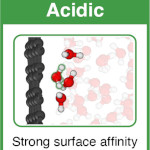
    Clays are everywhere — from soil and contaminant transport to emerging energy technologies. But at the molecular level, the reactivity of their edge surfaces remains underexplored. In this work, now published as J. Phys. Chem. Lett. (2026) 17, 9, 2679–2688, we show that clay edges are not static arrays of functional groups, but...
  • Dr. Niamh O’Neill, PhD

    Niamh O'Neill undertook her viva today, and passed with minor corrections -- many congratulations to Dr. O'Neill! During her tenure with the FAST group, Niamh's research focused on studying ion paring interactions at chemical accuracy and beyond, as well as scaling coupled cluster calculations for high-accuracy condensed phase simulations. She will be starting a...
  • Congrats to Dr. Sam Brookes for passing his viva!

    Sam G.H. Brookes undertook his viva today morning, and passed with minor corrections -- many congratulations to Dr. Brookes! Sam represents the first ever PhD student to graduate from the FAST group, setting a trend for future FAST members to follow! Pictured below is Sam and his "PhD hat" (built by his fellow...
  • Towards routine condensed phase simulations with delta-learned coupled cluster accuracy: Application to liquid water

    Machine learning potentials and foundation models are changing atomistic simulation — but to truly raise the bar, we need to break out of the standard DFT reference. Our new paper, published as J. Chem. Theory Comput. (2025) 21, 22, 11710–11720, pushes that frontier: we demonstrate a Δ-learning route towards coupled-cluster accuracy for the...
  • Psi-k 2025 Conference

    We had a great time in Lausanne for the 7th Psi-k conference, held at the SwissTech Convention Centre, EPFL across 25 to 28 August 2025, with a week full of interesting talks, insightful discussions, and wonderful science! Thank you to the Psi-k organising committee for the excellent event, we very much enjoyed...
  • CO₂ hydration at the air-water interface: A surface-mediated “in-and-out” mechanism

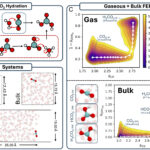
    In this study, we uncovered a previously unknown reaction mechanism, showing that CO₂ can react at the interface with similar energetics to the bulk phase. This finding challenges the common assumption that surface reactions are suppressed, and has important implications for climate models and our understanding of carbon uptake by the oceans. Congratulations...
  • Punting on the River Cam

    To celebrate Lars's successful PhD viva, the FAST group headed out to the punts to drift lazily down the River Cam (after all, what better way is there to study water, than to simply float on it?). Much fun was had, with a few of us taking turns to push the really...
  • June BBQ

    We decided to take advantage of the great weather, and held a (veggie-friendly) BBQ party at Wolfson College! Some good fun was also had afterwards throwing/kicking a ball around. Congrats to Darren, Joe, and Steffen for recently completing their halfway reports & presentations for the MPhil!
  • Protons accumulate at the graphene-water interface: Xavi’s first lead-author paper out in ACS Nano

    Congratulations to Xavi, who just published his first lead-author paper as ACS Nano (2025) 19, 18, 17728–17737: a major milestone and a fantastic piece of work! In this study, we tackled a long-standing question: how do protons and hydroxide ions behave at the graphene-water interface? While it's well-known that protons like to hang...
  • FAST goes to the Cambridge Half-Marathon 2025

    Apparently the parkruns weren't enough: Christoph, Darren, Isaac, Niamh, and Xavi decided to test their allegiance to the FAST name, and prove themselves at the Cambridge Half-Marathon! We were also joined by Sam Coles from the ICE group. Ultimately, Isaac proved to be the FASTest of us all, clocking in at 01:24:49. Congrats...
  • Winter 2024 group event

    To celebrate the upcoming Christmas, we decided to take our theories of solid water and put them into practice – by demonstrating how to skate on it! We were joined also by Hugo Rauch from the ICE group, to make it all the more fitting. Some of us skated around and around in...
  • Growing FAST and parkruns

    The group is growing FAST: We have five new members this term. Very warm welcome to Ioachim Dusa, Isaac Parker, and Darren Lim who are starting their PhD's. We are also honoured to have Yixuan Feng & Hubert Beck visiting our group for some time. Continuing our FAST tradition, we've convinced some of...
  • Wetting of H₂O by CO₂: Sam’s first lead-author paper wins cover picture

    Our latest work, led by Sam and featured on the cover of the JCP, delves into the complexities of the CO₂–H₂O interface using machine-learned potentials. The work, also highlighted in a Scilight article, offers new insights into interfacial tension and CO₂ phase behavior, with implications for climate research and carbon capture technologies.
  • To pair or not to pair? Niamh’s first lead-author paper out in JPCL

    The question of ion-pairing in sodium chloride has puzzled scientists for decades, with no clear consensus on the relative stability of contact versus solvent-separated ion pairs due to the delicate balance of interactions involved. Published in the Journal of Physical Chemistry Letters J. Phys. Chem. Lett. 2024, 15, 23, 6081–6091, our latest research...
  • Winter 2023 group event

    To welcome Eduard who's a visitor for three months, we got together to rescue the world by stopping an asteroid headed to earth in the Armageddon escape room at Lockhouse. Before that we had a nice group dinner.Welcome Eduard!
  • Insight into Aqueous Phase

    Understanding complex aqueous systems Water remains the most fascinating liquid in our world. It is not only the “elixir of life”, but its understanding is also crucial to tackle some of the most pressing societal challenges of our time, such as climate change, ocean accidification, and clean water supply. In our research, we follow...
  • Towards Converged Interactions

    Reaching Coupled Cluster Accuracy The potential energy surface (PES) of a system, which governs all its structural, dynamic and thermodynamic properties in the Born-Oppenheimer approximation, is currently in many cases best described by coupled cluster theory. This has granted the CCDS(T) approach the title of the “gold standard” in quantum chemistry. Thus, it...
  • Machine Learning Potentials

    Learning structure-energy relations Machine learning in computational chemistry has emerged as an indispensable driving force for innovation. By combining the low cost of traditional empirical potentials with the accuracy of ab initio methods, machine learning potentials deliver long time and large length scales required for insight into complex molecular systems. Instead of physically...
  • n-AQUA meeting in Venice

    As part of our parent ICE-group we had a great time in Venice full of insightful discussions, excellent science and exciting future potential collaborations! This trip has been the initial meeting of the n-AQUA project, jointly awarded to Angelos Michaelides, Mischa Bonn, and Lyderic Bocquet, which we have the honor to contribute...
  • Seasonal greetings

    ...with this nice video from the Royal Institution. Great to feature as scientific consultant on this topic close to our scientific passion. https://youtu.be/nJ6LY8dX1r4
  • TYC Early Career Award

    Very honored to receive the first TYC Early Career Award for our work on understanding complex aqueous systems with machine learning.
  • Nature paper on monolayer confined water

    Our ICE group paper on the phase behavior of monolayer nanoconfined water is finally out in Nature. Amazing lead by Venkat Kapil, but not possible without the other collaborators!