Category: news

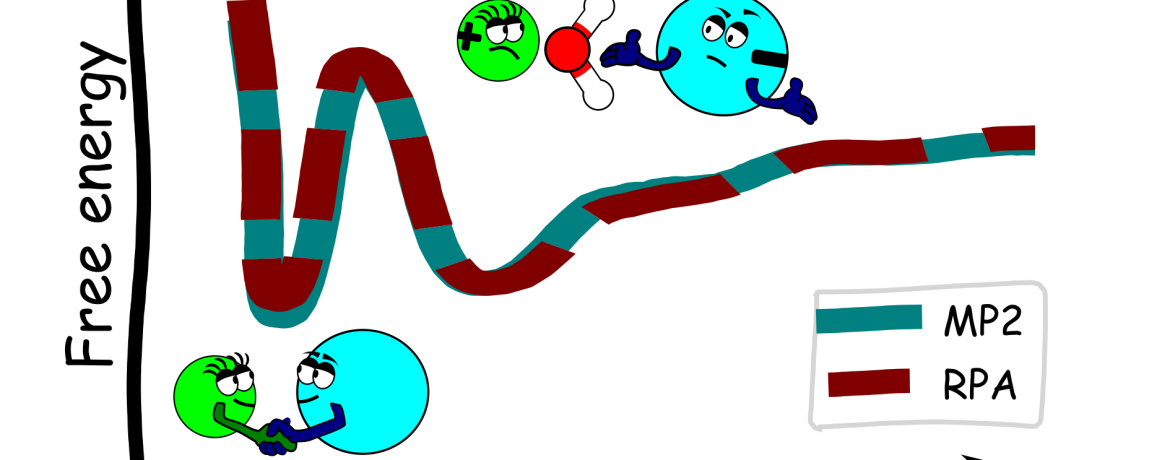
Does water become more or less reactive when squeezed into gaps just a few molecules wide? Literature has disagreed for years. Using enhanced sampling molecular dynamics with machine-learned potentials, we found a surprisingly clean answer: confinement on its own doesn’t change water’s reactivity. Once you account for pressure and chemical potential, the apparent “confinement effect” […]

Read more

Clays are everywhere — from soil and contaminant transport to emerging energy technologies. But at the molecular level, the reactivity of their edge surfaces remains underexplored. In this work, now published as J. Phys. Chem. Lett. (2026) 17, 9, 2679–2688, we show that clay edges are not static arrays of functional groups, but dynamic proton-conducting […]

Read more

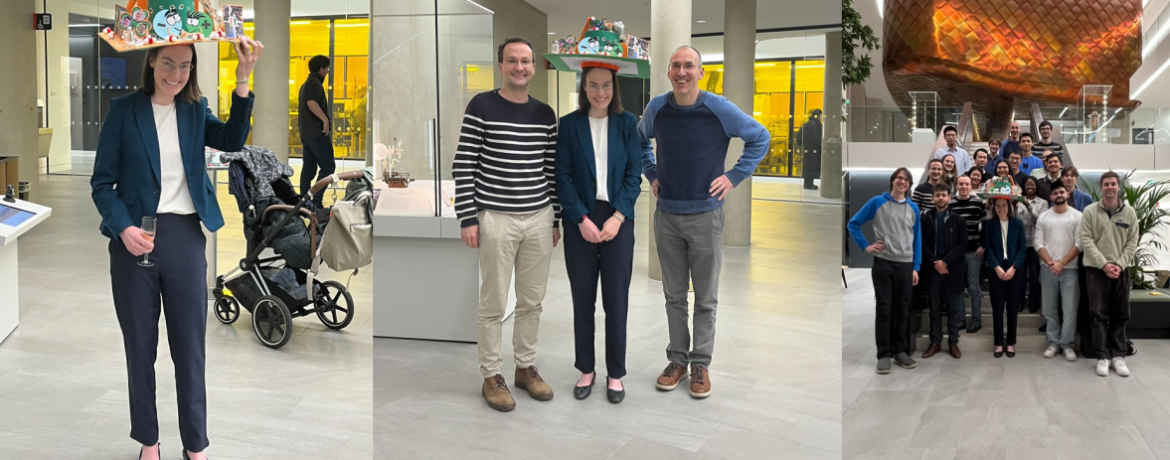
Niamh O’Neill undertook her viva today, and passed with minor corrections — many congratulations to Dr. O’Neill! During her tenure with the FAST group, Niamh’s research focused on studying ion paring interactions at chemical accuracy and beyond, as well as scaling coupled cluster calculations for high-accuracy condensed phase simulations. She will be starting a postdoc […]

Read more

Machine learning potentials and foundation models are changing atomistic simulation — but to truly raise the bar, we need to break out of the standard DFT reference. Our new paper, published as J. Chem. Theory Comput. (2025) 21, 22, 11710–11720, pushes that frontier: we demonstrate a Δ-learning route towards coupled-cluster accuracy for the condensed phase, […]

Read more

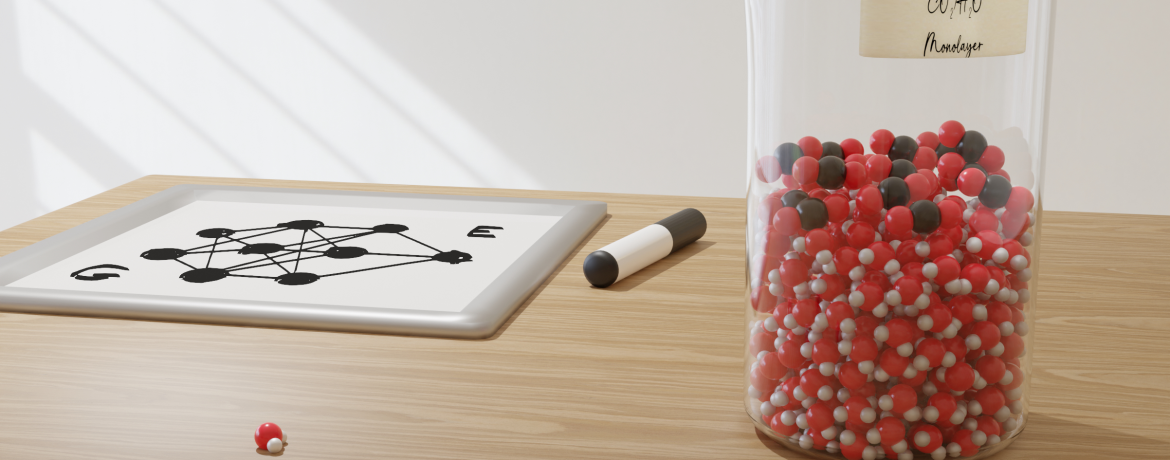
In this study, we uncovered a previously unknown reaction mechanism, showing that CO₂ can react at the interface with similar energetics to the bulk phase. This finding challenges the common assumption that surface reactions are suppressed, and has important implications for climate models and our understanding of carbon uptake by the oceans. Congratulations to Sam, […]

Read more