Category: Research-News

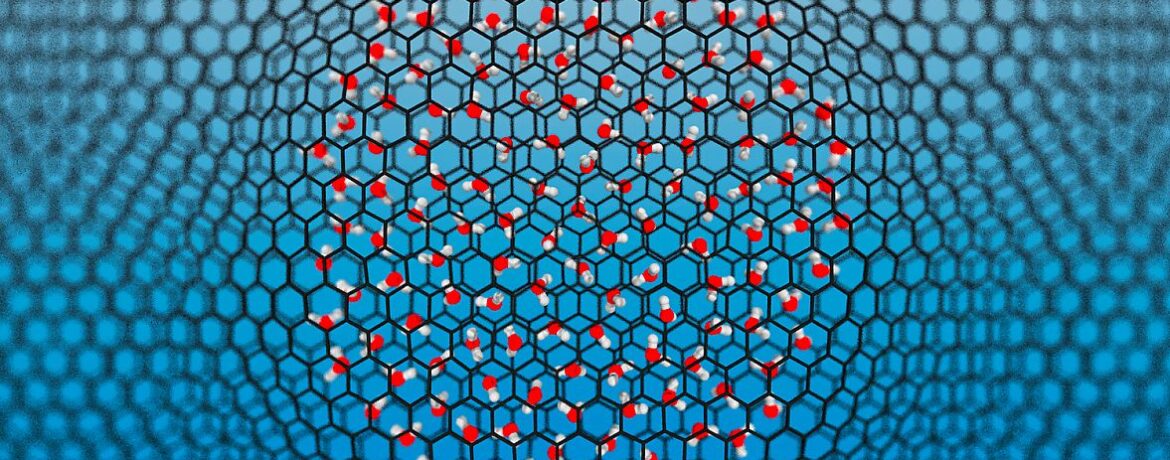
Does water become more or less reactive when squeezed into gaps just a few molecules wide? Literature has disagreed for years. Using enhanced sampling molecular dynamics with machine-learned potentials, we found a surprisingly clean answer: confinement on its own doesn’t change water’s reactivity. Once you account for pressure and chemical potential, the apparent “confinement effect” […]
Read more

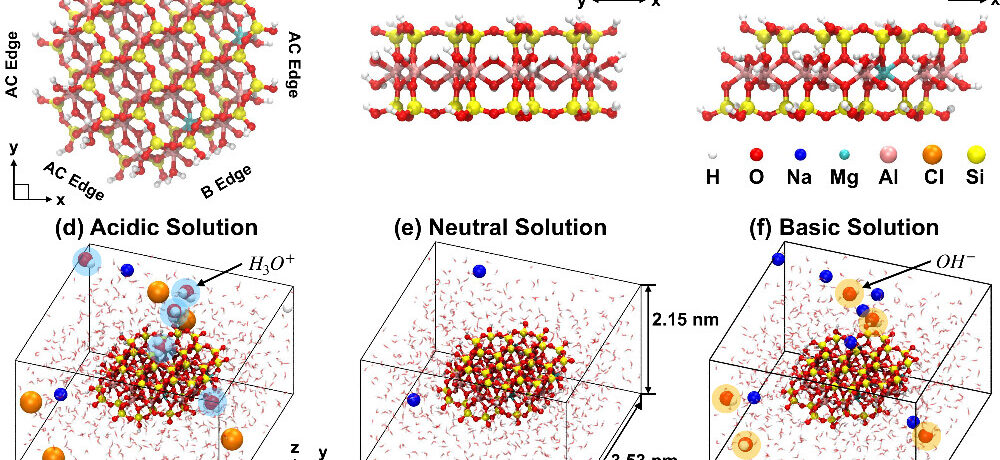
Clays are everywhere — from soil and contaminant transport to emerging energy technologies. But at the molecular level, the reactivity of their edge surfaces remains underexplored. In this work, now published as J. Phys. Chem. Lett. (2026) 17, 9, 2679–2688, we show that clay edges are not static arrays of functional groups, but dynamic proton-conducting […]

Read more

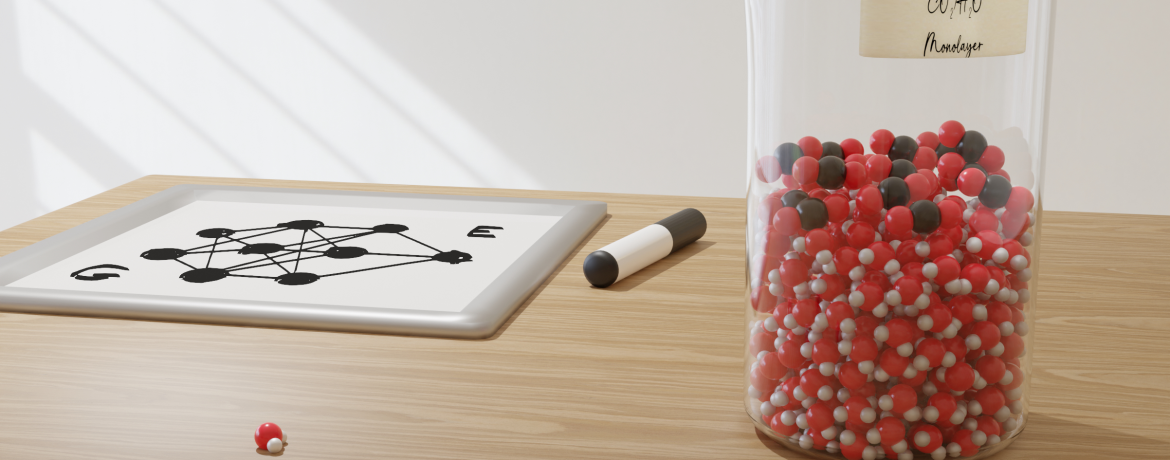
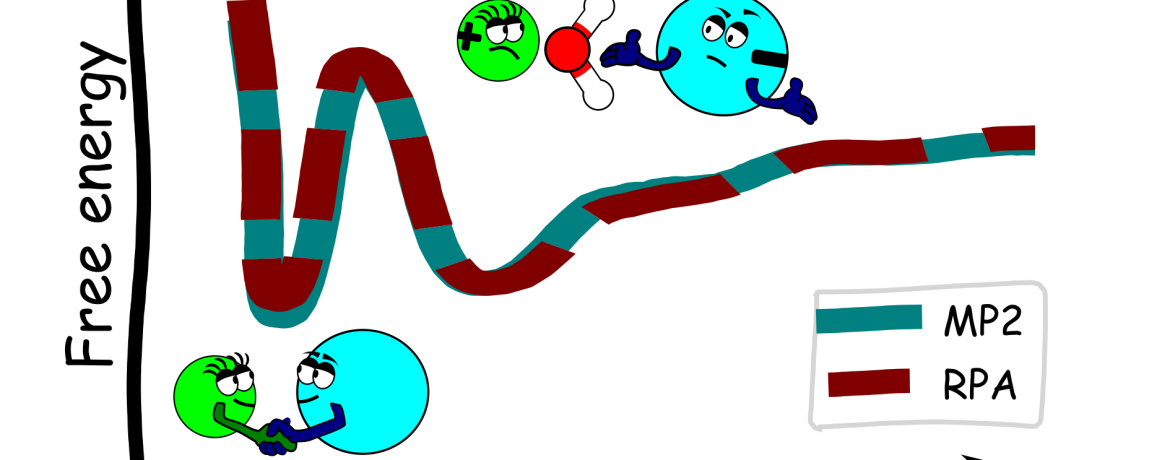
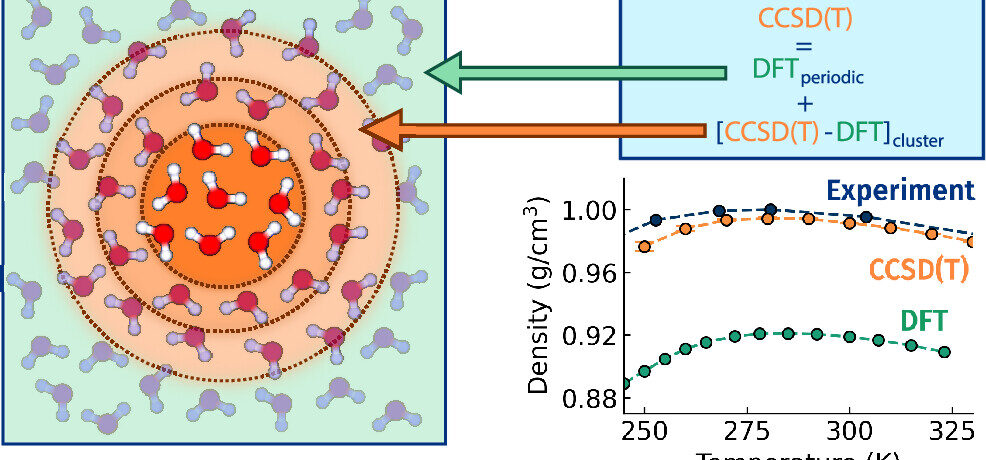
Machine learning potentials and foundation models are changing atomistic simulation — but to truly raise the bar, we need to break out of the standard DFT reference. Our new paper, published as J. Chem. Theory Comput. (2025) 21, 22, 11710–11720, pushes that frontier: we demonstrate a Δ-learning route towards coupled-cluster accuracy for the condensed phase, […]

Read more

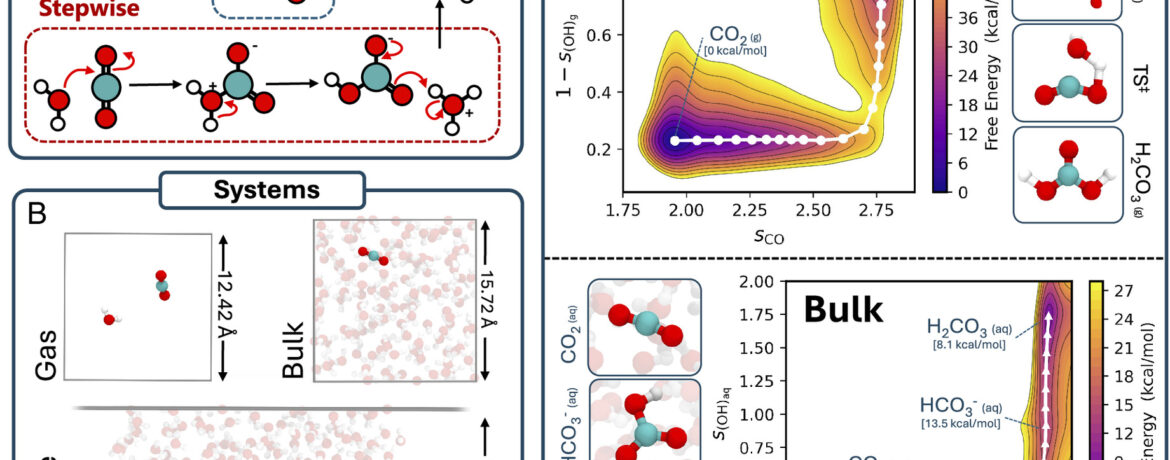
In this study, we uncovered a previously unknown reaction mechanism, showing that CO₂ can react at the interface with similar energetics to the bulk phase. This finding challenges the common assumption that surface reactions are suppressed, and has important implications for climate models and our understanding of carbon uptake by the oceans. Congratulations to Sam, […]

Read more

Congratulations to Xavi, who just published his first lead-author paper as ACS Nano (2025) 19, 18, 17728–17737: a major milestone and a fantastic piece of work! In this study, we tackled a long-standing question: how do protons and hydroxide ions behave at the graphene-water interface? While it’s well-known that protons like to hang out at […]

Read more

Our latest work, led by Sam and featured on the cover of the JCP, delves into the complexities of the CO₂–H₂O interface using machine-learned potentials. The work, also highlighted in a Scilight article, offers new insights into interfacial tension and CO₂ phase behavior, with implications for climate research and carbon capture technologies.

Read more

The question of ion-pairing in sodium chloride has puzzled scientists for decades, with no clear consensus on the relative stability of contact versus solvent-separated ion pairs due to the delicate balance of interactions involved. Published in the Journal of Physical Chemistry Letters J. Phys. Chem. Lett. 2024, 15, 23, 6081–6091, our latest research utilizes explicitly-correlated […]

Read more